Every human being should find his place in life, but his right place, the place worthy of him.
Heydar Aliyev
Ashaghy Govhar Agha Mosque
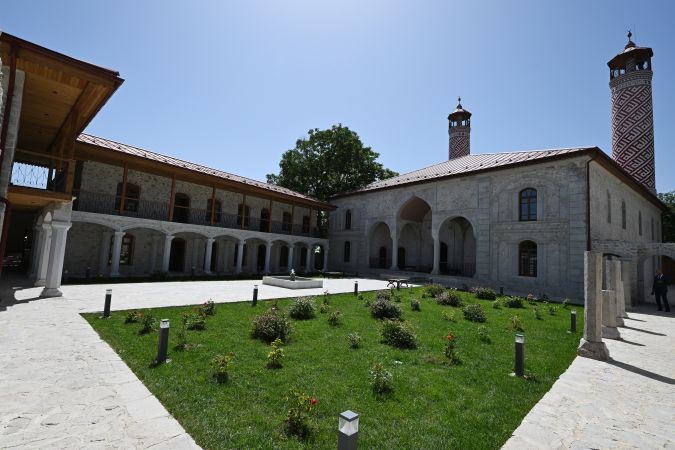
Located in Shusha, the Ashaghy Govhar Agha Mosque was restored by the Heydar Aliyev Foundation.
Built in the architectural style by Kerbalayi Safikhan Garabaghi in the 19th century, the Ashaghy Govhar Agha Mosque is considered to be the first among the mosques built in Shusha by Govhar Agha, the daughter of Ibrahim Khan. To make the mosque taller and more attractive, the architect placed the minarets on the rear façade. Cylindrically shaped, the minarets of the two-storied mosque were built of bricks, covering the prayer room with joined arched dome.
Seriously damaged as a result of еруheavy shelling by Armenian armoured units during the occupation of Shusha, the mosque had fallen victim to vandalism.
Restoration works were launched in the mosque in December 2021 by the Heydar Aliyev Foundation, supported by Pasha Holding. Specialists from Austria, Italy, Latvia and Türkiye were involved in the project. It is the Ashaghy Govhar Agha Mosque where the Heydar Aliyev Foundation has performed one of the most extensive restoration works in Shusha as to the scale of destruction. After the completion of the restoration works, inauguration of the mosque took place in July 2024.
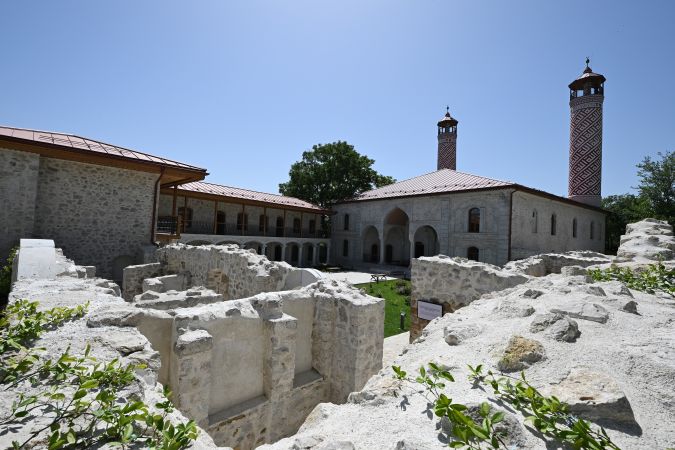
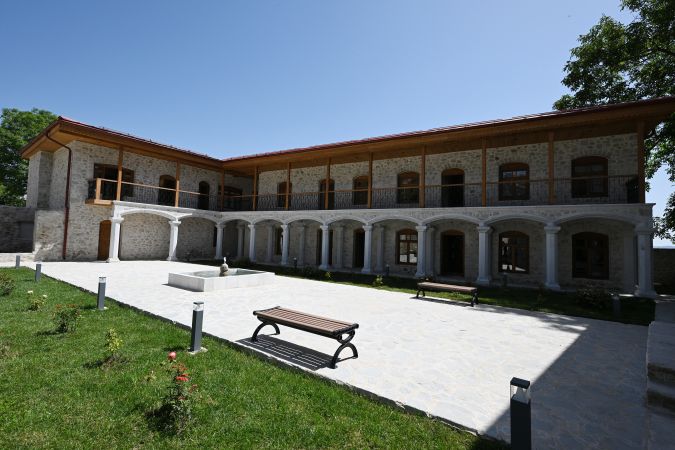
Carried out by preserving the original architectural style, the restoration works covered, along with the mosque, also the madrasa building on the territory. Works on excavation, removal of earth and preparation of gravel layer were carried out in the mosque. Moreover, works on plastering the upper layer of the roof dome with special mix were performed. With participation of foreign specialists, parts of historical motifs were fastened onto the interior surface of the domes using the microinjection method. The walls added later in the madrasa section were removed and works on filling the main walls with the injection method were performed.
In the course of the restoration works in Ashaghy Govhar Agha Mosque, a number of facts proving the Armenian vandalism were discovered. So, various writings, interventions, including a cross engraved on the wall, were found. Part of the demolitions of the madrasa building, which had been subjected to Armenian vandalism, were preserved. Every visitor coming to visit the mosque will become a witness of the Armenian vandalism against this historical-religious monument.
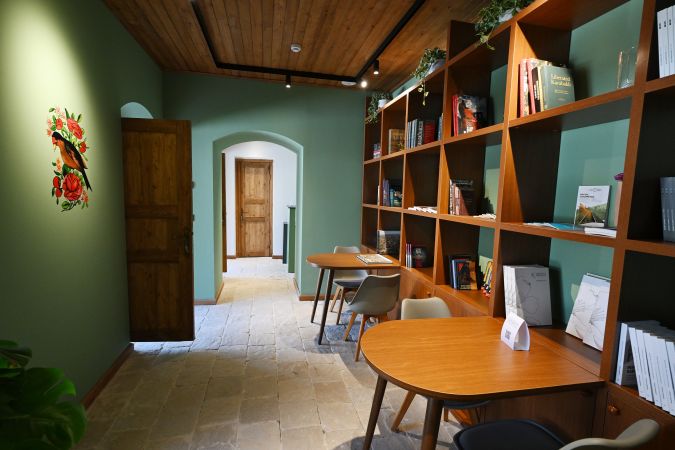
A museum was created in the madrasa building on the mosque’s territory. The exposition on the theme “Garabagh and Eastern Zangezur Museum: Before and After the Occupation. Renascence.” contains information, photo and video materials about Garabagh and Eastern Zangezur before the occupation, religious, historical and cultural monuments destroyed by Armenians during the years of occupation, facts of ecocide, as well as revival of Garabagh and Eastern Zangezur.
One of the most serious ramifications of the occupation has been the intentional destruction of a cultural heritage of global importance, including monuments related to the Islamic religion. According to preliminary examinations, 65 mosques were razed to the ground during the occupation, although, unfortunately, this number is growing. With a view to showing the extent of the vandalism committed against a series of religious monuments located on the territories of Garabagh and Eastern Zangezur and conveying the true facts to the world society, photo and video materials are showcased at the museum. In the section of the museum called “Historical and cultural monuments destroyed during the occupation”, photo and video materials reflecting the historical and cultural monuments subjected to vandalism during the occupation are presented.
In the section “Ecocide during the occupation”, facts about the military aggression by Armenia against Azerbaijan, violation of human rights and a number of international legal norms as a result of the occupation, social and economic ramifications and the damage caused to the cultural heritage, as well as an unheard-of ecological terror, large-scale and long-term plundering of natural resources are conveyed to the visitors.
In the section “End of the 30-year Grief”, information, photo and video materials about the glorious Victory gained by the Victorious Azerbaijani Army in the 44-day war, as well as putting an end to the grief of people who had lived 30 years with the dream of returning to their homes are displayed.
In the section “Revival of Garabagh and Eastern Zangezur” are given materials about the life being today revived in Garabagh and Eastern Zangezur. Development works being carried out under the leadership of Azerbaijani President Ilham Aliyev are directed towards the revival of Garabagh and Eastern Zangezur, restoration of the national memory of the people of Azerbaijan, as well as presentation of rich historical traditions and national-cultural values to the world. Photos and video materials reflecting this revival are displayed at the museum.
Various publications about Garabagh and Eastern Zangezur are showcased here. Works reflecting views of Shusha - the pearl of Garabagh - are presented at the museum within the framework of the international photo-project “Four Seasons in Shusha”.